New Hampshire drug-related deaths – 2011

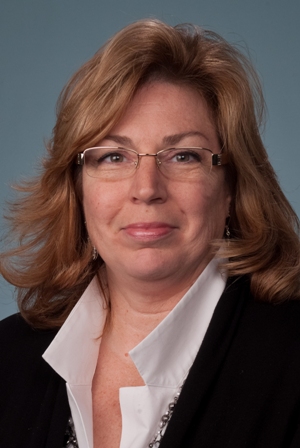
The number of drug-related deaths in New Hampshire hit 200 in 2011. During poison prevention week, our New Hampshire educator, Laurie Warnock, presented on this growing problem and what can be done to prevent it. Read The Nashua Telegraph article about her presentation to learn more.

Posted in Medication Safety, Regional News, Substance Abuse | Comments Off on New Hampshire drug-related deaths – 2011

Prescription Drug Abuse: An ED perspective

NNEPC Medical Director Dr. Tamas PeredyThe abuse of prescription drugs, especially opioid painkillers, is a growing public health concern. Our Medical Director, Dr. Tamas Peredy, is also a doctor with the Maine Medical Center Emergency Department. He answered some questions about this issue from an ED doctor’s perspective.

The FDA has called prescription drug abuse an “epidemic.” Do you agree with this based on what you are seeing in the emergency department?

TP: I have heard the terms epidemic and pandemic to describe the rapid rise in prevalence of prescription (primarily opioid) misuse. This problem is blatantly evident in my emergency department practice. I have seen a rapid rise in complications related to chronic opioid therapy including injuries and deaths, pain complaints related to opioid induced hyperalgesia and withdrawing patients with interrupted opioid supplies. The evidence is now clearer than ever that a steady dose of an opioid loses its efficacy after only several weeks while escalating doses to maintain efficacy causes an ever-increasing side effect profile. Also I have seen a general acceptance of sharing of prescriptions due to the high costs. When shared with others for non-medical purposes in particular, the risks are great for addiction, drug-related criminal activity and health endangering risky behaviors.

Do ED doctors get training on how to assess pain? What about training on how to address the risks of abuse?

TP: Emergency doctors provide crucial acute symptom relief in the setting of multiple painful diagnoses. The relief of suffering is a patient’s right and a primary obligate of a physician. They generally understand the pharmacology of pain relief not just with opioids but other adjunctive therapies. Pain however is a subjective negative stimulus that is experienced differently by different individuals. There are no good objective measures and thus physicians have had to rely upon subjective biased views to validate the patient’s pain. Physicians have been taught an overly simplistic single axis yardstick of pain from zero to ten. Now more sophisticated analyses take into consideration functional impairment and the amount of psychological suffering that often accompanies pain.

Physicians are generally better doctors than detectives, regardless of media hyperbole. They neither have the time nor resources to perform exhaustive investigations into patient’s histories to attempt to catch them at misrepresentation. Also, folklore around drug-seeking behavior identification is poorly validated in research literature. Now more tools than ever are available, however, to assist in identifying patients who may exhibit obvious patterns of medication misuse, such as shared electronic medical records, prescription monitoring programs and adulteration-proof prescriptions.

Do EDs have policies related to prescribing pain medication to patients? Do you think professional associations or hospitals should have policies or recommendations on prescribing prescription pain medications?

TP: Most hospitals, emergency departments, professional associations and physician practices have adopted policies to support the limited distribution of opioid therapy. Some policies are geared toward educating patient groups and adjusting expectations. Policies that are robust and flexible can support a balanced approach to pain management while those that are inflexible and extreme do not allow for individual concerns and treatment options.

Do you think prescription monitoring programs are used as much as they should be?

TP: The current prescription monitoring programs are an excellent idea with only mediocre implementation. The concept that a physician prescriber can check a database of past prescriptions for their patient is an obvious safety tool that prevents doctor-shopping or medication duplication. On the other hand, states have turned to low-cost vendors to deliver the needed information technology solutions. Access to the information becomes clunky and difficult. So much information is needed regarding the patient to avoid misidentification that the search becomes cumbersome and time-consuming. Striking a balance between patient privacy, accuracy, security and rapid access has yet to be achieved.

Do you think ED doctors can or should play a role in educating patients and families about medication safety—proper storage and disposal, not sharing, etc.?

TP: ED doctors must play a key role in educating patients regarding the safety of the medication they prescribe. Generally in the past we have limited the scope of the discussion to the safety of the patient taking the medication; however, it is clear that environmental safety issues are of equal concern, for example, if there are small children or teens in the house. Opioids are a target for home burglaries and an important source of unintended exposures. Educating patients about proper product stewardship including medication disposal is very important.

Are there ways ED doctors and poison centers are working together on this issue? Is there more that they can do?

TP: Poison centers have traditionally served as the virtual EDs of the pharmacology information world. They have primarily provided treatment information after the misuse or overdose has occurred. I think that EDs could better reinforce the idea that poison centers exist not just for toddlers who accidentally ingest things in their environment but also for adults who have questions about dosing, drug interactions and side effects. Other resources such as doctors’ offices and retail pharmacies can provide similar information; however, they may involve the inconvenience of waiting on the line or being unavailable after hours. Ideally, in the future health records should be shared among poison centers so that staff can assist patients with the most accurate information.
Posted in Medication Safety, National News, Poison Prevention, Regional News, Substance Abuse | Comments Off on Prescription Drug Abuse: An ED perspective

Adults are more likely to die from poisoning than kids

When most people think of poisonings they think of a little kid getting into cleaning products stored under the kitchen sink. These poisonings happen a lot, but so do poisonings from adults taking too much medication.

In fact, medications are the leading cause of poisonings—regardless of how old you are. The number of people dying from medication-related poisonings has been increasing in recent years. The bulk of these deaths occurred among adults and were caused by prescription drugs.

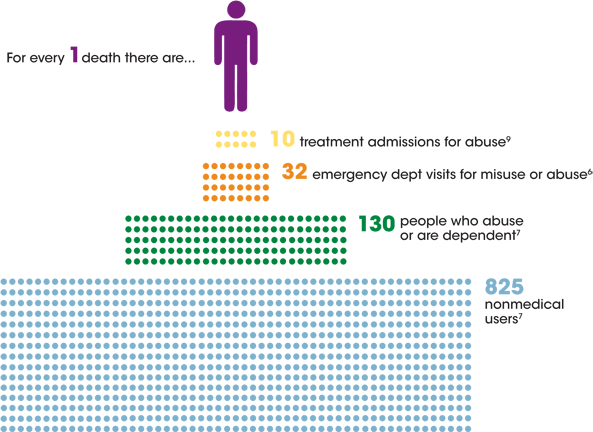
Prescription painkillers account for nearly three out of four prescription drug overdoses. In 2008, the US Centers for Disease Control determined there were 14,800 prescription painkiller deaths. But these deaths were just the tip of the iceberg. There were more than 475,000 visits to the emergency department related to prescription painkillers, and more than 12 million people reported using painkillers in a way other than prescribed by a doctor.

Many things are being done nationally and locally to address this growing problem. To learn about what emergency rooms and emergency doctors are doing, read tomorrow’s Q & A with NNEPC Medical Director Dr. Tamas Peredy.

Prescription painkillers

Presription Painkiller Infographic

Posted in Medication Safety, National News | Comments Off on Adults are more likely to die from poisoning than kids

Home, safe home? Not always, but help is just a call away

Did you know that most poisonings happen at home? A lot of these poisonings are by little kids, who learn through trial and error. They explore their surroundings and put things in their mouth. Here are some examples:

  • An 18-month-old boy gets into a purse and gets cortisone skin cream all over his hands, face and neck.
  • A 2-year-old girl gets into her vitamin bottle and her mother doesn’t know how many she’s eaten.
  • A 1-year-old girl is playing with a tube of diaper cream and bites on the tube, getting a mouthful of cream.

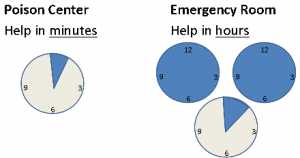
Rather than going to the emergency room and waiting hours to get help for poisonings like these, you can call the poison center at no charge and get immediate help. Poison centers are available 24 hours a day calls are answered by trained health care professionals, who can save you time and money in an emergency.The poison center can save you time

Just call 1-800-222-1222 or visit www.nnepc.org to chat online.

Posted in Poison Prevention | Comments Off on Home, safe home? Not always, but help is just a call away

Of porcupines and poison prevention

Did you ever think a porcupine might improve your health?

Alisa Zapp Machalek, writing for the Inside Life Sciences series at the National Institute of General Medical Sciences website, has some interesting news about how porcupines could end up helping your health.

PorcupineResearchers in Massachusetts have been studying the barbed quills of porcupines to see if they might have uses in medicine. So far they have created medical tape with tiny barbs that they think could help fix hernias or close surgical wounds. If their tests are successful, these patches of tape could replace the meshes and staples hospitals currently use.

On top of that, they think studying the barbed quills could help them design needles that hurt less. Interesting stuff!

Here at the Northern New England Poison Center, we have our own helpful health-promoting porcupine. Spike, the poison prevention porcupine puppet, has been the center of our National Poison Prevention Week activities for five years now.

Spike is the star of Spike’s Poison Prevention Adventure, a video for children in preschool through about first grade, that centers on the simple message of “If you don’t know what it is, stay away.” Through songs and games, Spike shows kids that his quills go up as a warning when he’s around something that might not be safe, but go back down around safe items.

Spike, the poison prevention porcupineIn conjunction with National Poison Prevention Week, the NNEPC has been holding its own Spike Education Program for schools each March since 2009, reaching more than 47,000 students over the last four years. Participating schools get a copy of the video, a plush Spike hand puppet, and take-home poison prevention materials for their students. They can also report on their events for a chance to win individual plus finger puppets for their students. For this year’s Poison Prevention Week, March 18-22, we had nearly 70 schools sign up for the program across Maine, New Hampshire and Vermont.

For more information or to download program materials, see our Spike program page. You can also order your own Spike Education Kit in our store.

Posted in Poison Prevention, Regional News | Comments Off on Of porcupines and poison prevention

How can you help a child with a cold feel better?

As we talked about in yesterday’s post, cold and cough medications are not recommended for young children. But if your child feels miserable, what can you do?

To bolster my arsenal of symptom-relieving tricks (and to give my husband something else to do when he’s reaching for the cough syrup), I talked to the NNEPC hotline staff, did a little research and tried a few home remedies.

Humidifier: Putting a humidifier in your child’s room while they sleep can help relieve congestion. It can also help prevent colds because the cold virus thrives in dry air. Just make sure to keep the humidifier out of your child’s reach to prevent burns. And change the water every day to prevent mold growth.

Chicken noodle soup: Maybe Grandma was right? It’s very important make sure your child gets plenty of fluids when they are sick. Plus there’s lots of nutrition in the yummy vegetables and it will warm their little tummy.

Honey: Score another one for Grandma! Honey has long been thought to relieve sore throats—it turns out it might suppress coughs, too. Pennsylvania State University’s College of Medicine looked at the effectiveness of honey versus dextromethorphan. Parents rated their children’s cough and sleep quality after giving a dose of honey, DXM, or nothing before bed. Honey did better than both doing nothing and giving DXM. Start with a teaspoon. But don’t give honey to child under a year old. 

Nasal aspirator: If your kid’s mucus is goopy, suck it out. I know, its gross, and they hate it, but clearing those little nasal passages will help them breathe better. And if it’s dry and crusty and causing clogging, try softening it by putting over-the-counter saline drops in their nose before using the aspirator.

Chest rub: Using a mentholated rub on your child’s chest, especially before bedtime, can help them breathe a little better. Only use a rub that says it’s for kids on the package (these do not contain camphor).

Extra cuddle time: The positive health benefits of touch are being clinically confirmed time and time again. Snuggling with a blankie, a favorite stuffed animal and a parent can often be the best medicine of all.

Raising the head of their bed: This drains the mucus from their head and into their tummy and helps them sleep better. What works the very, very best (in my experience) is to put a pillow or book under the head of the mattress. Just make sure you have the pillow under the mattress, not in bed with them!

If you are worried, go ahead and call your doctor. Your doctor knows your child and will be able to help figure out if you should come in. They can also recommend a home remedy or suggest pain and/or fever reducing medicine if needed.

Posted in Medication Safety | Comments Off on How can you help a child with a cold feel better?

Is it safe to give my child cold medicine?


If your house has been anything like mine this winter, your family has been busy playing “pass the cold.” As a parent of a toddler it’s really tough when your little one looks up at you with those sad eyes on that little snot-covered face. It’s tempting to give them cold medicine, but it just isn’t worth the risk.

Since 2008 the FDA has recommended that caregivers not give over-the-counter cold medicine to children under 2 years old because of reports of children having serious side effects. On top of that, according to the FDA, there is no evidence that cold medicine is effective for kids this age. The American Academy of Pediatricians goes even further, recommending not to give cold medicine to children under 6.

In response to the above recommendations, Consumer Healthcare Products Association members have updated labels on children’s cough and cold medications that advise parents and caregivers not to use them for children under age 4.

Knowing what medicine to give your child and how much can be difficult. Talk to your doctor or pharmacist to decide if you should give your child medication and how much is safe.

If you think you may have given your child the wrong medication or too much medication, call the poison center at 1-800-222-1222 or chat online

Posted in Medication Safety, Poison Prevention | Tagged | Comments Off on Is it safe to give my child cold medicine?

How much Tylenol can you give your baby?

Every parent at some point has asked this question: How much medicine is safe to give my baby? One of the most common medications for parents to wonder about is acetaminophen (Tylenol®), which can be used to bring down a fever or relieve pain.

If you are giving your child acetaminophen, it is important to check the strength and follow the dosing instructions on the label every time you give it to help prevent a poisoning.

This is especially true because of recent changes in the strength of acetaminophen for infants. Last year, manufacturers stopped making concentrated acetaminophen drops (80mg/0.8ml). If you still have unexpired concentrated drops, they are safe to give to your child. Just be sure to use the dropper provided with the medication, read the directions and give the correct dose for your child’s weight.

The new liquid acetaminophen medication has a different concentration (160mg/5ml) and a different dosing device—either a syringe or a dosing cup. Again, just be sure to read the label and follow the directions for the medication.

Here are some other tips for preventing medication poisoning in your child:

  • Know your child’s current weight. If your child is less than two, ask your doctor what dose you should give.
  • Read the label on the package for the concentration, the correct dose and the directions.
  • Only use the dosing device that came with the medication. Do not use flatware spoons because they come in different sizes and may not be equal to a true teaspoon (5 ml).
  • Check with your doctor or pharmacist if you have any questions about what type of acetaminophen product you have, what dose you should give or how to measure the dose.
  • Do not give medication more frequently than the label says.
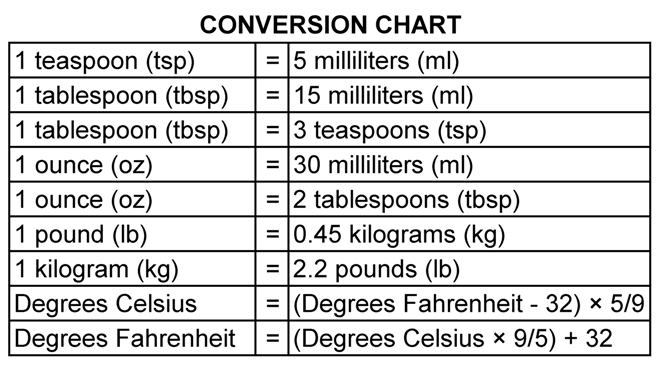
  • Know you numbers. Check out the handy measurement conversion table below.
  • Call the poison center at 1-800-222-1222 or chat online if you have questions or think you may have given your child the wrong medicine or too much medicine.

For more information, visit the FDA’s Drug Safety site.

Measurement Conversion Chart

Posted in Medication Safety, Poison Prevention | Comments Off on How much Tylenol can you give your baby?

Are boys more likely to get poisoned than girls?

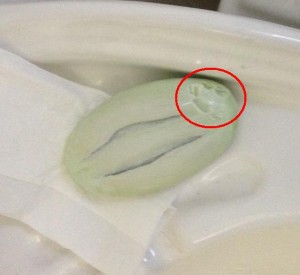
Do young boys get poisoned more often than young girls? In our house the answer appears to be yes. Just the other day I caught my 10-month-old son with the bathroom soap in his mouth. Here is the picture with bite marks to prove it.

Soap with teeth marksJust last week he somehow sneaked into the kitchen and opened up our liquor cabinet without my noticing until he had already grabbed a bottle of wine! He is so close to walking on his own. He can stand and take a step unassisted. I am excited to see him running around the house, but also nervous—his new found freedom will also mean more access to possible dangers.

He seems much more interested in getting into things that are not safe than his older sisters ever did. Is it because he sees everything his sisters do, and thinks he can too? Or is it because we now have three and it is harder to supervise him as closely as we did his sisters? Is it because he is boy and genetically different? Or is he just naturally more curious than his sisters?

According to the World Health Organization, “Boys have higher rates of poisoning than girls in all regions of the world, probably because of differences in socialization.”

Northern New England Poison Center calls show a similar pattern. Among kids five and under, boys accounted for nearly 54% of unintentional poisoning cases in 2012. Among one- and two-year-olds, it was close to 53%. These numbers don’t include medication errors by caregivers.

Regardless of the reason, young boys do seem to get into potentially poisonous things more often than girls, although the difference is small. The important thing to remember is that most poisonings are preventable. Do what you can to prevent poisonings:

  • Keep potentially dangerous products, including cleaners, medications and car fluids, in their original containers. Never put non-food products in food or drink containers.
  • Keep products locked up and out of children’s sight and reach. Keep purses and suitcases, including those of visitors, out of the reach of children.
  • Don’t leave products unattended if children are around.
  • Always replace the safety cap immediately after use.
  • Identify your plants. Remove poisonous ones from your home or keep them out of reach.

And of course, if you think your child got into something, call the poison center at 1-800-222-1222 or chat online.

Posted in Poison Prevention | Comments Off on Are boys more likely to get poisoned than girls?

Foreign travel tips: How to stay safe and healthy while away from home

Traveling to far-away places can be exciting – experiencing different foods, language and culture. Hopefully, your vacation doesn’t include experiencing an injury or sickness.

Model airplane with globeThere are some basic steps you can take before you go to help keep you healthy on your adventure:

  • Learn more about health concerns at your destination and what vaccinations you may need.
  • If you have a medical condition, have your doctor write a letter describing your health and safety needs.
  • If you take medication, pack it in your carry-on luggage. Keep it in its original container.
  • If you have allergies, wear a “medical alert” bracelet.
  • If you wear glasses, bring an extra pair.
  • Find out if your medical insurance will cover you overseas. Some insurers cover expenses such as medical evacuation. If it does not, consider supplemental insurance. Note: Medicare does not provide coverage for hospital or medical costs outside the U.S.

 Here are some other safety steps to take before you trip:

  • Make sure your passport is signed and the emergency information is accurate and complete.
  • Leave copies of your itinerary, passport identification page, insurance card, medication list, driver’s license and other important documents with family or a friend in the U.S.
  • Sign up for the State Department’s Smart Traveler Enrollment Program. This will help the US government contact your if there is a family emergency or a crisis where you are traveling.

If you get sick or injured while traveling abroad, contact the U.S. consulate for assistance in locating medical services and contacting your family.

Know what medical resources are available where you will be traveling. For instance, not every country has a poison center. In fact, only 46% of the World Health Organization Member States have one. If you are traveling overseas, find out if your destination has a poison center and write down the number. You never know when you may need it.

If traveling anywhere in the U.S., you can call a local poison center 24-hours a day at 1-800-222-1222. Consider programming your phone with this important resource.


Posted in Poison Prevention | Comments Off on Foreign travel tips: How to stay safe and healthy while away from home

Traveling with your medication

Traveling can be fun—but don’t take a vacation from medication safety. Follow these tips to make sure you have a safe trip.

Prepare for your trip ahead of time:

  • Bring more medication than you need in case of travel delays.
  • Count the number of pills in each container before you leave. Write down these numbers and take the record with you.
  • If you are traveling through more than one time zone, have your doctor or pharmacist make a plan to adjust the timing and dosage of your medicines (download our medication calendar).

Pack your medication carefully:

  • Store medication in its original container.
  • Keep your medication in a cool, dry place, out of direct sunlight.
  • Pack medication in your carry-on luggage.
  • Carry a complete list of your medications (including prescription medications, over-the-counter medications and dietary supplements), the doses, schedule and the phone numbers of your doctor and pharmacy.

Follow safe medication practices, whether you are at home or away:

Plan carefully to make sure your trip is fun and worry free. If you take the wrong medication, or take more than directed, call the poison center at 1-800-222-1222 or chat online.

Take this information with you! Order or download your own copy of our Traveling With Your Medicine fact sheet.

Posted in Medication Safety | Comments Off on Traveling with your medication

How is drug abuse a poisoning?

When people think of drug abuse they often don’t think of poisonings or the poison center. But when people try to get high by drinking too much alcohol, inhaling paint fumes or taking medication with alcohol, they are poisoning their bodies.

A poison is any substance that through its chemical action causes illness or harm if someone eats, drinks, touches or breathes it in. An everyday item can be poisonous if someone uses too much, uses it in the wrong way (misuse) or mixes it with another substance that makes it harmful.

A drug overdose is a poisoning because the person was harmed by taking too much of the substance. In 2009, nearly 32,000 people in the U.S. died from an unintentional poisoning and 91% of these were the result of drug overdoses. Drugs commonly involved in unintentional poisoning deaths include opioid pain medications (prescription painkillers) such as methadone, hydrocodone or oxycodone.

If you are an educator, consider framing substance abuse prevention messages as poison prevention messages. It may be a reminder that people who abuse drugs are poisoning their bodies. 

To learn more about substance abuse or for a listing of resources, check out our substance abuse webpage.


Posted in National News | Comments Off on How is drug abuse a poisoning?