How much caffeine is in your favorite drink?

Have you ever wondered how much caffeine is in your favorite beverage?

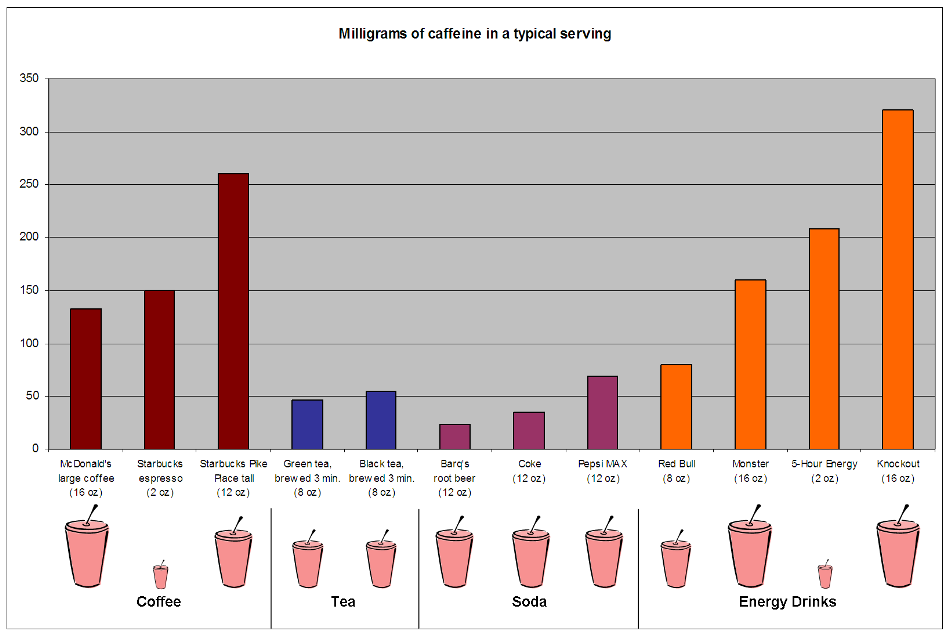
The chart below gives a look at how much caffeine is in some popular drinks.

The amount of caffeine in coffee and tea can vary quite a bit, depending on how it’s brewed. An 8-ounce cup of coffee might have as little as 100 milligrams, or it could have more than 200.

It’s also important to pay attention to serving size. You can see that a can of Monster® has about twice as much caffeine as a can of Red Bull® but the Monster can is twice as big.

Caffeine Content of Popular DrinksClick for larger version

Caffeine content information from the Center for Science in the Public Interest.

Posted in National News | Comments Off on How much caffeine is in your favorite drink?

Wondering how to safely clean nail polish or permanent marker off your kid’s face?

Have you ever had a child drink your nail polish? Or maybe suck on a permanent marker?

We get calls like these a lot at the poison center. We had more than 130 calls about nail polish and nearly 180 about pens and markers in 2012.

Most of the time, your child will be fine if they do this. Nail polish does have some scary-sounding chemicals in it, but it comes in small bottles that don’t pour very quickly, so it’s hard for a child to drink enough to be harmful.

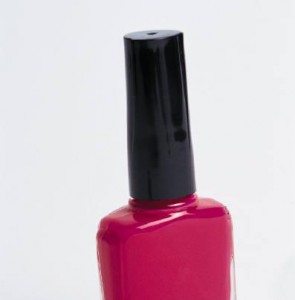
Nail PolishMarkers are billed as “permanent” but they will come off eventually and the chemicals in them are not harmful in such a small amount.

In fact, with these two items and plenty of others, we’re more likely to see problems for the child when parents or caregivers try to clean up these mishaps in the wrong way.

Sometimes they will try to use nail polish remover to clean up a kid’s face. This will actually be more unpleasant for the child than the nail polish itself. Nail polish remover contains harsh chemicals—it won’t cause any lasting problems, but it can make the child’s skin red and sore.

With markers, people will sometimes try to use a marker eraser solution to try to clean the child’s face. These products also contain skin irritants that can leave the child with redness and soreness.

In both cases, your best bet for cleanup is good old soap and water. And if you did use nail polish remover or marker eraser solution first, some mild soap, a thorough rinse and maybe some moisturizer can help.

The most important thing to remember is any time you have a question about a child getting into something, call the poison center at 1-800-222-1222 or chat with us online. Our poison specialists are here 24/7 and will help you treat your child the right way. And sometimes you’ll find out things aren’t as bad as you thought!

Posted in Poison Prevention | Comments Off on Wondering how to safely clean nail polish or permanent marker off your kid’s face?

Mixing or compounding Tamiflu for children

The flu has been particularly bad this year. Some pharmacies have had trouble getting a hold of Tamiflu® suspension, a liquid form of a drug that is used to treat the flu in children and others who can’t swallow pills.

If your doctor has prescribed Tamiflu® capsules for your child, but your child is unable to swallow capsules, the CDC has provided a handy guide for how to mix the pills up with a liquid. There is a text version and also a PDF with pictures of the steps. The instructions mostly talk about using chocolate syrup, but you can also use corn syrup, caramel topping, light brown sugar dissolved in water, or another thick, sweet liquid.

If you are a pharmacist and need to compound Tamiflu® for patients, the manufacturer has a page with emergency compounding instructions.

Posted in Medication Safety, Regional News | Comments Off on Mixing or compounding Tamiflu for children

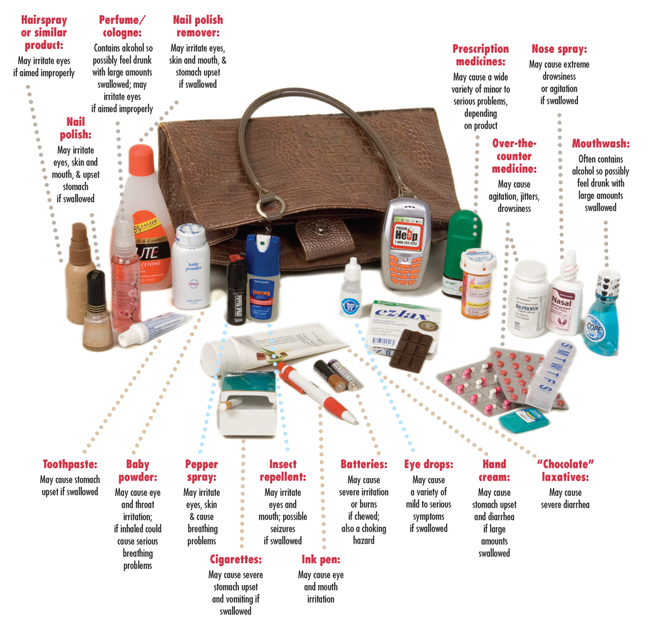
Do you have a poisonous purse?

Have you ever been somewhere with a fussy baby you needed to distract and reached in your handbag to find something for them to play with?

Your purse may be more dangerous than you realize.

Many of us have handbags very similar to the one below. They are filled with many useful everyday products that can be harmful if a child or pet gets into them. To help prevent purse poisonings:

  • Keep your purse where pets and kids can’t reach it.
  • Avoid giving children household products to play with.

Call the poison center at 1-800-222-1222 or chat online if your child or pet gets into any of these products.

Poison Purse

Image copyright 2007 University of Wisconsin Hospital and Clinic Authority Board

Visit our shop to download the above Poison Purse poster.

Posted in Poison Prevention | Comments Off on Do you have a poisonous purse?

How I called the poison center and saved money

Last weekend I called the poison center and ended up saving my family a potential $150 night’s stay at a local hotel.

My husband and I have been wanting to redo our basement since we bought our home three years ago. Nothing fancy, just make the unfinished space a safe place for our kids to play. You know, ride their tricycles, bounce a ball, some place to burn energy during the long winter days.

I left with the kids for three hours while my husband applied the floor coating. I had drilled him a bunch of times, “What did the label say to do about fumes?” He told me it did not say anything about using in a well-ventilated area so I should not worry about it.

When I returned with the kids the main floor smelled really “chemically.” Within a couple of minutes I was nauseated and felt weird. I was worried about my kids, especially my eight-month-old son, breathing in the fumes. I began to open all the windows on the main floor, even though it was only 20-something degrees outside. The product took about 12 hours to dry, so we were not sure how much longer it was going to smell really bad and make us feel sick.

We started brainstorming what we should do. My husband began discussing spending the night out of our home, either at my in-laws or at a local hotel. I suggested we call the poison center to see how bad it was for us, especially our son, to keep breathing it, and how long we should stay out of our home.

It turns out that you can get a headache and feel sick to your stomach from any sort of strong smell, even ones that are not harmful. The product was safe to breath in, unless one of us had other breathing problems such as asthma. The poison specialist told us that the fumes we were breathing in were not harmful. He thought for our own comfort we may want to ventilate the house or leave for a couple of hours. It wasn’t necessary for any safety reason except for our comfort.

The one simple call to the poison center saved us a lot of hassle and money. It also gave us peace of mind. My husband said it best when he looked at me and said, “That is a good example of what no one thinks to call the poison center about. I am glad you called.”

You can be the family hero, too. Just know the poison center phone number—1-800-222-1222, anywhere in the U.S.—and give them a call if you are not sure if you or a loved one are in harm’s way.


Posted in National News | Comments Off on How I called the poison center and saved money

Water main break in Portland, Maine

There was a water main break on the peninsula in Portland, Maine, this morning and there is a boil-water order in effect until 9:30 a.m. Thursday, December 20. If you are east of 295, do not use tap water to drink, bathe or brush your teeth. Use a hand sanitizer after washing your hands.

The Portland Press Herald has more, including a map of the affected area.

Feel free to call the NNEPC at 1-800-222-1222 or chat with us if you have questions about contaminated water.

Posted in Regional News | Comments Off on Water main break in Portland, Maine

Christmas tree decorations – Are they safe?

Ever wonder if your Christmas tree decorations are poisonous to your pets or kids? Most likely, your ornaments are nontoxic, but if you have young children or dogs or cats, there are some steps you can follow to keep them safe.

At our house, you can tell how fragile, expensive or potentially harmful an ornament is by where it was hung on our tree. The very top has the glass, antique and sentimental ones. The bottom branches, where our kids can reach, have very few ornaments.

Bubble light

Bubble light by Di Bédard

In particular, we avoid hanging the following types of ornaments on the bottom branches:

  • Older ornaments. These may contain lead paint, which can be harmful if a young child or pet puts the ornament in their mouth.
  • Angel hair. This is made from spun glass, which can irritate a child’s mouth or eyes.
  • Bubble lights. Some of these contain methylene chloride, which can irritate or burn a child’s mouth or skin if they bite into a light. They may also get a headache, feel sick to their stomach, or feel drowsy.

Just a few things to keep in mind when decorating your tree. Most of your decorations will be fine, but if you have any concerns, just give us a call (1-800-222-1222) or chat now.


Posted in Poison Prevention | Comments Off on Christmas tree decorations – Are they safe?

‘Tis the Season to Be Poisoned

Reaching into the poison center archives, we bring you “‘Tis the Season to Be Poisoned,” a holiday safety poem by John H. Trestrail III, R.Ph, ABAT, the former managing director of the Helen DeVos Children’s Hospital Regional Poison Center in Michigan. Enjoy!

‘Twas the morning post-party, when all through the house,
No adult was stirring, not even your spouse.
The children, you thought, were asleep in their beds.
But, what you didn’t know, they had other ideas in their heads.

Your house was awash in post-party trash,
And the kids thought this was a gold mine—better than cash.
There were ashtrays with butts and glasses with drink,
And a visitor’s purse lay there by the sink.

The kids were delighted and felt ever so free,
And then their bright eyes—locked onto the tree!
There was tinsel, and lights that bubbled so merry,
And a strange plant with fruits, called “Jerusalem Cherry”.
Food was left out on the table all night,

And if they could have seen the bacteria—what a horrible sight!
And there by the fireplace was a box shaped just right,
That contained some powder to make fire colors bright.
A small toy broke open, and there at their feet,
Was a round tiny battery that looked good to eat.

As you see your home, where you thought poisons naught,
On this holiday season, was NOT as safe as you thought!
As you rose from your sleep and rubbed your eyes free,
You looked for the kids, and a disaster you see!

You sprang to the phone, not a moment to spare,
And talked to the folks you knew would be there.
Your poison center sure helped you get through the mix,
And you thought—“How’d we ever get into this fix?”
For you see holidays can present problems so rare,
That before they can happen, be sure to prepare.

It takes just a moment to think what might be,
And clean up your trash, so your home’s poison free.
And so, my dear friends, keep the holidays bright,
Put all away, and sleep peaceful tonight.
Have a holiday bright, that is full of good cheer,
And from the staff of the poison center—“Have a Safe Year!”

Posted in Poison Prevention | Comments Off on ‘Tis the Season to Be Poisoned

Are your holiday plants poisonous to your pets?

Earlier this week, we talked about which holiday plants are poisonous to people, but keep in mind that some things that won’t harm a person can be poisonous to your cat or dog.

Amaryllis is one holiday plant that is harmful to pets—especially the bulb. If a dog or cat eats the bulb they will throw up, not feel like eating, have stomach pains, get diarrhea and possibly have tremors.

Holly, Jerusalem cherry and mistletoe are all harmful for cats, dogs and horses. If your pet eats a little bit of one of these plants they may throw up and have diarrhea. If they eat a larger amount they could have worse symptoms. Jerusalem cherry can give them seizures and mistletoe can slow down their heart.

To keep your pets safe this holiday season, keep plants and other harmful items up and out of the reach. Call the poison center at 1-800-222-1222 or chat to learn more about what plants and substances may be poisonous to your pet.

Remember that pets are different from people. For difficult poisonings, the NNEPC may recommend you call the ASPCA Animal Poison Control Center.

Posted in Poison Prevention | Comments Off on Are your holiday plants poisonous to your pets?

Poinsettias, amaryllises and mistletoe: Are your holiday plants poisonous?

Poinsettias

Poinsettias by Krista Kennedy

It’s time to deck the halls with boughs of holly. But is holly poisonous? What about other holiday plants like poinsettias and amaryllises? We often worry about our kids eating poisonous plants, but there are things you can do to keep your kids safe during this holiday season.

Every year we spend Christmas Eve with my in-laws. I always enjoy walking around the tree and looking at all the ornaments they have collected over the years, opening the presents under the tree, eating too many Christmas cookies and going to midnight mass together. We always have a great time and leave with many fun-filled memories.

I will be doing things a little bit differently this year, though, because I have a just-starting-to-crawl seven-month-old son. He is faster than you would think! This year after we bring in the gifts, overnight bags and snacks, I will be going around the house to make sure it is ready for him to explore. 

Amaryllis

Amaryllis by Dwight Sipler

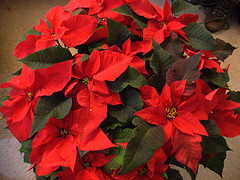
I will start by moving the Christmas cactus and poinsettia plants that are near the front door up high and out of reach—not because they are poisonous, but they could make him choke. If he ate a lot of the poinsettia plant he might feel sick to his stomach and throw up. But the idea that poinsettias will kill you is a myth. And Christmas cactuses are not poisonous at all.

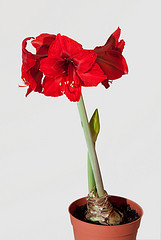
I will also put up high the beautiful amaryllis that blooms every year just in time for Christmas. Amaryllis bulb is the most harmful part of the plant. If a child eats enough of the plant, they may feel sick to their stomach or throw up. They may also get diarrhea.

Other holiday plants to keep out of children’s reach are mistletoe, holly and Jerusalem cherry.

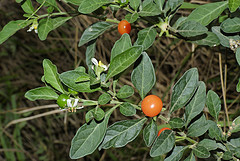
If a child eats a few berries or leaves from these plants, they may feel sick to their stomach, throw up or have diarrhea. If they eat a larger amount of mistletoe or Jerusalem cherry, they could have worse symptoms.

Mistletoe

Mistletoe by Eric Meyer

Jerusalem cherry

Jerusalem cherry by Tony Rodd


If you think someone has eaten one of these plants, or any plant that may be harmful:

  • Take all the pieces of the plant out of their mouth.
  • Give them a few sips of water or milk.
  • Chat now with the poison center or call 1-800-222-1222.

To learn more about poisonous plants, visit our poison index.

We hope you have a safe and beautiful holiday season.

Posted in Poison Prevention | Comments Off on Poinsettias, amaryllises and mistletoe: Are your holiday plants poisonous?

Don’t invite food poisoning to Thanksgiving

Turkey with thermometer
USDA photo, Creative Commons.

It can be very stressful cooking for a large group. What if there is not enough oven space? Or what if something is undercooked and people get sick?

If you are hosting Thanksgiving this year, these tips can help make sure your meal doesn’t leave your guests with food poisoning:

  • Wash your hands before and after touching food.
  • Wash dishes, knives, cutting boards and other kitchen items before and after handling raw food.
  • Wash fruits and vegetables thoroughly.
  • Keep raw meat separate from other food.
  • Cook your food thoroughly. You can’t tell if a turkey is done by just looking at it. Use a food thermometer.  You should cook your turkey, stuffing (cooked alone or in the bird) and casseroles to at least 165 degrees. Need to know what temperature other dishes should be cooked to? See our Safe Cooking Temperature Table (PDF).
  • Put your leftovers in the refrigerator within two hours. Remove all the stuffing from the turkey before you refrigerate the leftover meat. Keep stuffing, gravy or broth in separate containers.

Food poisoning can take anywhere from two hours to several days to make you sick. It can last up to 10 days. You may:

  • Feel sick to your stomach
  • Have stomach cramps
  • Throw up
  • Have diarrhea
  • Have a fever

For questions about food poisoning, call us at 1-800-222-1222 or chat now. We are open on Thanksgiving and every other day of the year, 24 hours a day.

Posted in Poison Prevention | Comments Off on Don’t invite food poisoning to Thanksgiving

NNEPC on ScienceBlogs

NNEPC Director Dr. Karen Simone was interviewed by Kim Krisberg of The Pump Handle on ScienceBlogs. Dr. Simone spoke about the importance of poison centers and the state of poison center funding.

“People seem to make the assumption that the poison center will always be there,” said Simone, a clinical toxicologist and director of the Northern New England Poison Center, which serves Maine, Vermont and New Hampshire. “They seem to think that any doctor or emergency room can handle this and it’s a shock when I say your average ER doctor doesn’t know how to (handle these cases).”

Read the whole thing!

Posted in National News | Comments Off on NNEPC on ScienceBlogs